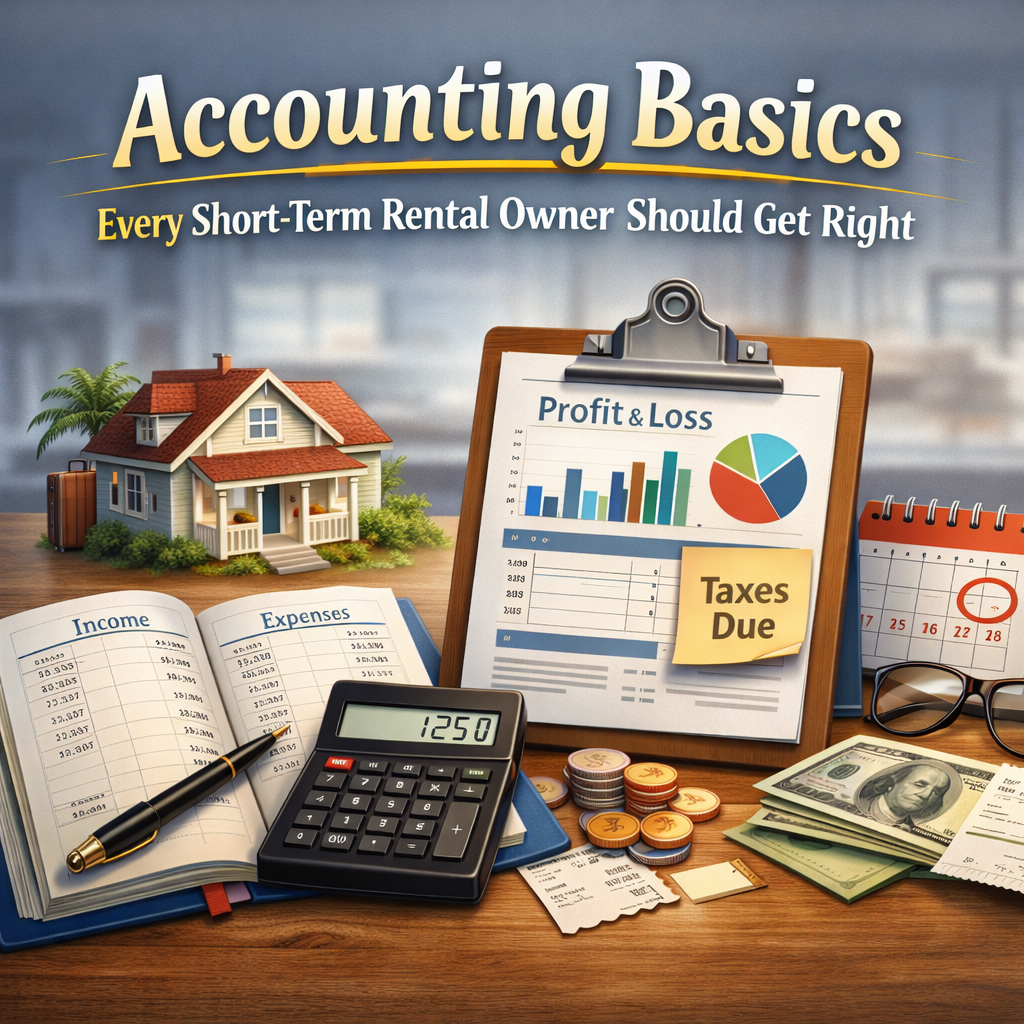
Most short-term rental owners can tell their occupancy rate, their average nightly price, and which months book out fastest, but far fewer can answer a much harder question with confidence: after everything is paid for, is this property actually making money?
Running a short-term rental often begins as something simple and slowly turns into a full-fledged business, sometimes without a clearly marked moment when that shift happens. Bookings increase, platforms multiply, expenses pile up, and at some point, the focus quietly moves from hosting well to trying to understand whether the number seven add up.
From my experience as an STR accounting expert, the gap is rarely demand or reviews. It is almost always accounting that was never designed to answer real business questions in the first place.
Most of us think of revenue as what Airbnb or Vrbo shows at the top of the dashboard, but short-term rental income usually comes from several smaller streams that are easy to overlook when things get busy.
This often includes:
● Cleaning fees
● Pet fees
● Early check-in or late check-out charges
● Direct bookings outside platforms
● Add-ons or upsell services
Platform statements are useful, but they are not the source of truth on their own. Reconciling those statements with actual bank deposits is the only way to be sure that everything earned is actually showing up where it should.
Most owners track expenses because they know they have to, especially once tax season comes around. Fewer owners track expenses in a way that helps them understand how each property is performing month to month.
Typical STR expenses include:
● Cleaning and laundry
● Utilities and internet
● Supplies and consumables
● Repairs and routine maintenance
● Insurance
● Host platform fees
● Advertising and paid traffic, including CPC ads
What often gets missed is assigning income and expenses by property, rather than pooling everything together. Property-level tracking makes it possible to see which units are actually carrying the business, which ones are underperforming, and whether rising costs are a one-off issue or a structural problem.
Mortgage payments are frequently entered as a single line item, even though each payment is made up of different components that behave very differently in your books.
A typical payment includes:
● Interest, which is deductible
● Principal, which reduces the loan balance but is not an expense
● Escrow amounts for property taxes and insurance
Recording these correctly keeps profitability accurate and avoids confusion when reviewing cash flow versus actual operating results.
There is a meaningful tax distinction between repairs and improvements., and treating them the same can cause issues later.
Repairs are generally deductible in the year they occur, while improvements must be depreciated over time. Getting this right becomes more important as properties age and maintenance costs increase.
Depending on where your property is located, you may need to account for income tax, occupancy or lodging taxes, and state or local hospitality taxes.
Some platforms handle lodging tax remittance automatically, while others do not, which makes it important to confirm what applies in your specific market rather than assuming it is covered.
Clean accounting does more than keep things compliant. It gives you confidence in your numbers, reduces stress at tax time, and allows you to make decisions about pricing, among other things, based on reality rather than assumptions.
If reading this made you realize that your reports answer some questions but not the ones that actually matter, you are not alone. And for owners who want to talk through their setup or sense-check their numbers, Accritic is offering one-on-one conversations focused on clarity and structure rather than selling.
You can reach us here:
Email: info@accritic.com
Phone no.: +1 929 704 1975
.png)