Construction accounting stands apart from traditional business accounting in fundamental ways. While most businesses track revenue and expenses through straightforward transactions, construction companies must manage complex, project-based operations that span months or even years. Understanding the unique aspects of construction accounting isn't just about keeping the books balanced, it's about maintaining profitability, ensuring cash flow, and making informed decisions that can determine whether your contracting business thrives or struggles.
The construction industry operates under a unique set of financial circumstances that demand specialized accounting approaches. Unlike retail or service businesses that complete transactions quickly, construction projects unfold over extended periods, often involving multiple revenue recognition points, fluctuating material costs, and intricate job-specific expenses.
Construction companies typically work on multiple projects simultaneously, each with its own budget, timeline, and profit margin. This creates a need to track costs and revenues at the project level rather than just at the company level. Additionally, contractors often deal with retention, progress billing, change orders, and complex payment terms that make standard accounting methods inadequate. Many growing construction firms are turning to offshore accounting services to handle these complex bookkeeping demands efficiently while maintaining focus on core construction operations.
The stakes are high. Poor accounting practices in construction can lead to cash flow problems, inaccurate job pricing, missed profit opportunities, and even business failure. According to industry research, cash flow issues remain one of the leading causes of construction business failures, making proper accounting not just important but essential for survival.
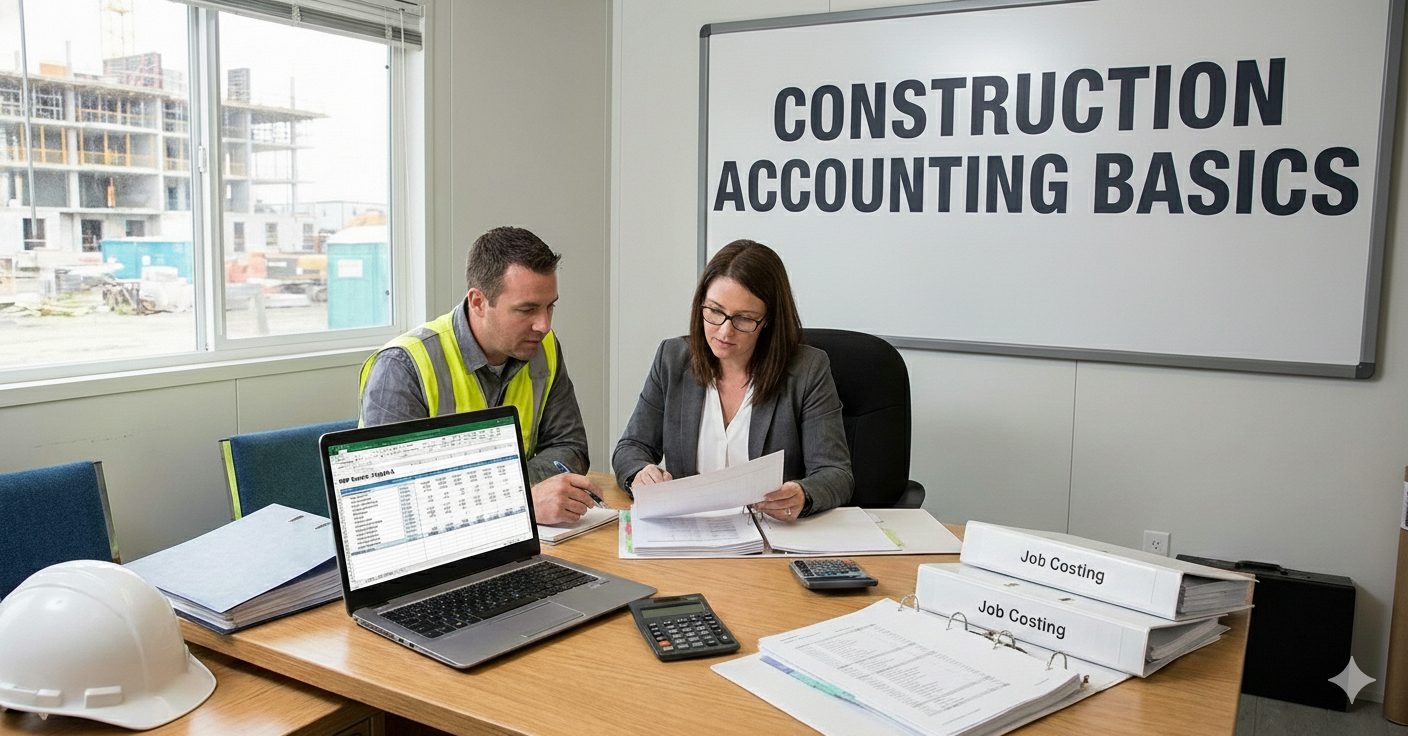
Job costing sits at the heart of construction accounting. This method involves tracking all costs associated with a specific project, allowing contractors to understand the true profitability of each job. Without accurate job costing, you're essentially flying blind, unable to determine which types of projects make money and which ones drain resources.
Every construction project incurs three primary cost categories: labor, materials, and overhead. Labor costs include wages for workers directly involved in the project, along with associated payroll taxes and benefits. Material costs encompass everything from concrete and lumber to fixtures and finishes. Overhead includes both direct job costs like equipment rental and permits, as well as indirect costs such as office expenses, insurance, and administrative salaries.
Effective job costing requires meticulous tracking from day one. Each expense must be coded to the correct project and cost category. This means implementing systems where field workers log their time accurately, material purchases are tagged to specific jobs, and subcontractor invoices are properly allocated. Many contractors use construction-specific software that integrates with accounting systems to streamline this process.
The benefits of accurate job costing extend far beyond knowing whether a single project was profitable. Over time, historical job cost data becomes invaluable for estimating future projects. If you know that kitchen remodels typically require 150 labor hours and bathroom renovations average 80 hours, you can bid new projects with confidence. This data also helps identify problems early, if costs are running higher than estimated halfway through a project, you can take corrective action before losses mount.
Work in Progress reports, commonly called WIP reports, provide a snapshot of every active project's financial status. These reports are essential management tools that reveal which jobs are profitable, which are losing money, and where your company's cash is currently tied up.
A comprehensive WIP report includes several key components for each project. The contract value shows the total amount the client agreed to pay. Costs to date reflect all expenses incurred so far. Estimated costs to complete project what you expect to spend to finish the job. Billings to date indicate how much you've invoiced the client, while costs in excess of billings show how much you've spent but haven't yet billed.
One of the most critical figures in a WIP report is the percent complete. This calculation determines how much revenue you can recognize under the percentage of completion method, which most construction companies use. The percent complete is typically calculated by dividing costs incurred to date by total estimated costs. If a project has incurred 60,000 dollars in costs and is estimated to cost 100,000 dollars total, it's 60 percent complete.
The over/under billing section reveals cash flow dynamics. If you've billed more than the earned revenue based on percent complete, you're overbilled, which creates a liability because you owe that work to the client. If you've billed less than earned revenue, you're underbilled, meaning you've performed work you haven't yet invoiced, which ties up your cash.
Regular WIP report review, ideally monthly, allows you to spot red flags immediately. Is a project's estimated cost to complete rising? That signals potential overruns. Are billings lagging far behind earned revenue? You may need to submit progress billing more frequently. This proactive approach to project monitoring can save thousands of dollars and prevent small problems from becoming major losses.
Construction accounting offers two primary revenue recognition methods: cash basis and accrual basis, with the percentage of completion method being the most common accrual approach.
Cash basis accounting is straightforward, you record revenue when you receive payment and expenses when you pay them. While simple, this method doesn't provide an accurate picture of project profitability or overall business health, especially for long-term projects. You might show a huge profit when you receive a large payment, even if the related work was performed months earlier.
The percentage of completion method matches revenue recognition to project progress. As work progresses, you recognize a proportional amount of the contract revenue, even if you haven't received payment yet. This method provides a much more accurate view of profitability and performance but requires diligent cost tracking and regular updates to completion estimates.
Under percentage of completion, if your project is 60 percent complete and the contract value is 200,000 dollars, you'd recognize 120,000 dollars in revenue, regardless of billing. This approach works well for most contractors because it aligns financial reporting with actual project progress.
The completed contract method delays all revenue recognition until a project is finished. While rarely used today, it might apply to small contractors or very short-term projects. However, it can severely distort financial statements and make it difficult to manage business performance.
Implementing sound financial practices separates successful construction companies from those that struggle. Start with a robust chart of accounts designed specifically for construction. This should separate direct costs by project and categorize expenses in ways that provide actionable insights.
Maintain separate accounts for operating expenses and project-specific costs. Many contractors make the mistake of lumping everything together, making it impossible to determine true job profitability or understand overhead rates. Your accounting system should clearly distinguish between costs that can be assigned to specific jobs and general business expenses.
Cash flow management deserves constant attention. Construction companies face unique cash flow challenges due to payment delays, retention, and the need to fund projects before receiving payment. Implement progress billing rather than waiting until project completion to invoice. Request deposits or mobilization payments to offset initial costs. Track accounts receivable aggressively and follow up on overdue invoices promptly.
Establish a reliable system for tracking and managing change orders. Change orders represent additional work beyond the original contract and should be documented, approved, and billed appropriately. Many contractors lose money by performing extra work without proper documentation and billing procedures.
Regular financial reviews are non-negotiable. At minimum, review WIP reports monthly, analyze cash flow weekly, and examine project profitability after completion. These reviews should inform future estimating, help identify operational inefficiencies, and guide strategic decision-making.
Consider working with accountants who specialize in construction. Construction accounting's unique aspects mean that general business accountants may miss important considerations. A construction-focused accountant can help with tax planning, ensure compliance with industry-specific regulations, and provide valuable business insights.
Construction accounting may seem complex, but mastering its fundamentals provides an enormous competitive advantage. Contractors who understand job costing can bid projects accurately and win profitable work. Those who use WIP reports effectively can identify and solve problems before they impact the bottom line. And businesses that implement financial best practices position themselves for sustainable growth and long-term success.
The investment in proper construction accounting systems and practices pays dividends through improved profitability, better cash flow, and the ability to make data-driven decisions. Whether you're a solo contractor just starting out or running an established firm, taking construction accounting seriously isn't optional, it's the foundation on which successful contracting businesses are built.
.png)