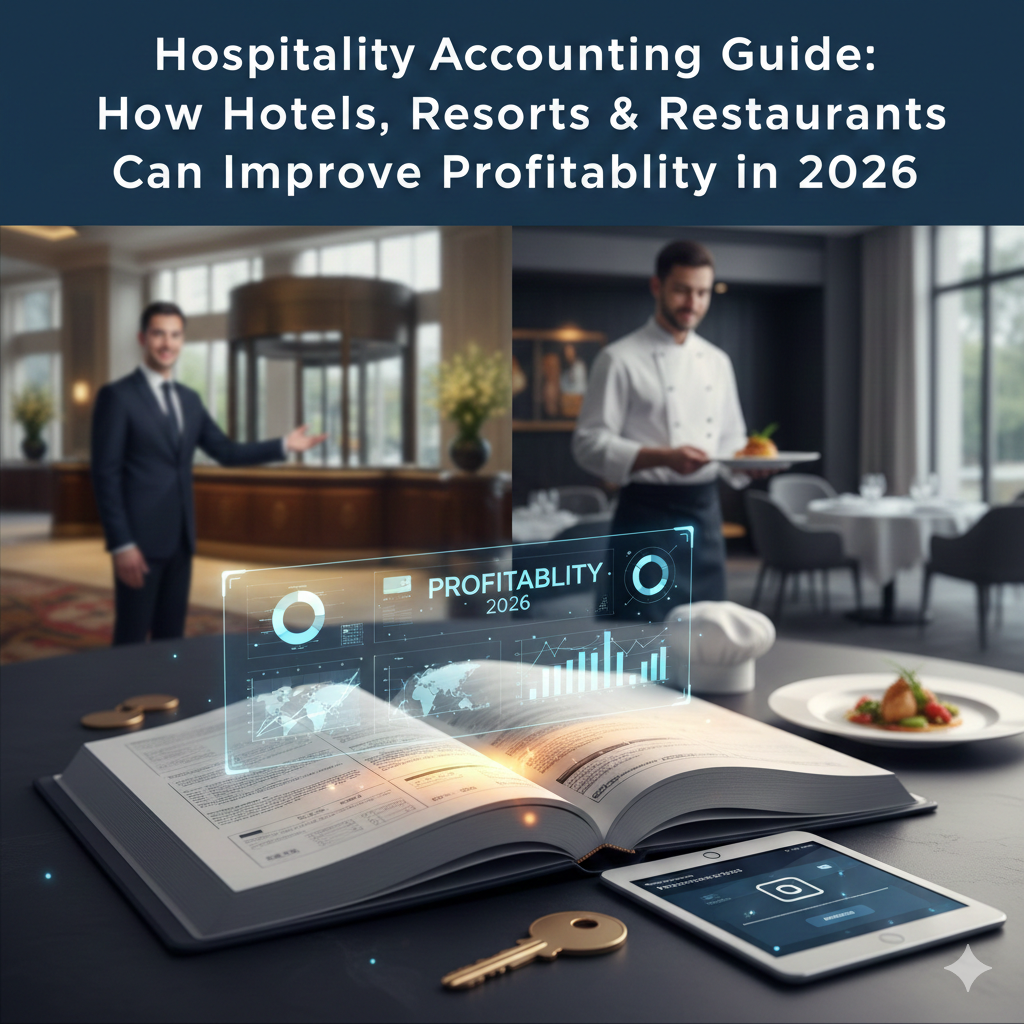
The hospitality industry operates on notoriously thin profit margins, with hotels averaging 10-15% and restaurants often working with margins as low as 3-5%. In this high-stakes environment, the difference between thriving and merely surviving often comes down to one critical factor: robust hospitality accounting practices.
As we move through 2026, hospitality businesses face mounting pressures from inflation, labor costs, and evolving guest expectations. Yet many operators still rely on outdated accounting methods that leave money on the table and obscure opportunities for growth. This comprehensive guide explores how modern hospitality accounting can transform your financial operations and significantly boost profitability.
Hospitality accounting differs substantially from standard business accounting due to the industry's unique characteristics: highly perishable inventory, fluctuating demand, multiple revenue streams, and complex operational structures. Whether you're managing a boutique hotel, a sprawling resort, or a busy restaurant, you need accounting systems designed specifically for these challenges.
At its core, hospitality accounting encompasses revenue management, cost control, departmental accounting, and financial reporting tailored to accommodate daily operations, seasonal variations, and the intricacies of guest services.
Unlike retail businesses, hospitality operations deal with inventory that expires daily. An unsold hotel room tonight represents lost revenue that can never be recovered. Similarly, restaurant ingredients have strict shelf lives, and empty tables during peak hours mean missed opportunities. This reality makes revenue forecasting and inventory management critical components of hospitality accounting.
Most hospitality businesses operate several profit centers simultaneously—rooms, food and beverage, spa services, events, and more. Each department requires separate tracking, analysis, and optimization. Effective hospitality accounting provides visibility into each revenue stream's performance while maintaining a holistic view of overall profitability.
Hotels and restaurants carry substantial fixed costs including rent, property maintenance, and base staffing levels, regardless of occupancy or covers served. This cost structure makes every incremental sale crucial and demands precise break-even analysis and contribution margin calculations.
Gone are the days when monthly financial statements provided adequate oversight. In 2026, successful hospitality businesses leverage technology to access real-time financial data. Cloud-based accounting platforms integrated with your property management system or point-of-sale system deliver instant insights into revenue, costs, and cash flow.
Real-time reporting enables you to identify problems immediately—whether it's food cost creeping up, labor hours exceeding targets, or revenue falling short of projections—and take corrective action before issues compound.
Breaking down financial performance by department reveals which areas drive profitability and which drain resources. A hotel might discover that while rooms generate strong margins, the restaurant operates at a loss. Armed with this knowledge, management can make informed decisions about pricing, staffing, marketing focus, or even whether to outsource certain operations.
Track revenue, direct costs, and contribution margins for each department separately. This granular approach identifies your most profitable offerings and helps allocate resources effectively.
For hotels and resorts, RevPAR remains the gold standard metric, calculated by multiplying your average daily rate by occupancy percentage. However, forward-thinking operators also track Total Revenue Per Available Room (TRevPAR), which includes all revenue sources, not just room sales.
Restaurants should focus on RevPASH, which measures revenue generated per seat per hour of operation. These metrics help you understand whether you're maximizing the earning potential of your physical space.
Cost control in hospitality requires vigilance across multiple categories:
Labor Costs: Typically the largest expense for hospitality businesses, labor requires careful scheduling optimization. Use historical data and forecasting to align staffing levels with demand. Track labor cost as a percentage of revenue by department and shift. Many properties now use workforce management software integrated with their accounting systems to automate scheduling and monitor productivity.
Food and Beverage Costs: Maintain tight controls through recipe costing, portion control, inventory management, and regular physical counts. Your target food cost percentage varies by concept, but most restaurants aim for 28-35%. Beverage costs typically run 18-24% for beer and wine, higher for craft cocktails. Track variances weekly and investigate discrepancies immediately.
Operating Supplies: From cleaning products to guest amenities, supplies can quietly erode margins. Establish par levels, negotiate vendor contracts, and track usage patterns to identify waste or theft.
Modern hospitality accounting software automates routine tasks like accounts payable, payroll processing, and bank reconciliation, freeing your team to focus on analysis and strategy. Look for platforms that integrate seamlessly with your existing systems—property management systems, point-of-sale terminals, inventory management, and payroll providers.
Automation reduces errors, accelerates month-end close processes, and provides the data accuracy necessary for confident decision-making. Many systems now offer artificial intelligence features that flag anomalies, predict cash flow needs, and recommend optimizations.
Hospitality businesses face unique cash flow challenges, with revenue concentrated on weekends or peak seasons while expenses occur consistently. Develop detailed cash flow forecasts that account for seasonal patterns, upcoming capital expenditures, and debt service obligations.
Maintain adequate cash reserves to weather slow periods without sacrificing service quality or taking on expensive short-term financing. Consider implementing dynamic pricing strategies that encourage advance bookings and provide earlier cash infusion.
Monthly financial statement review should go beyond noting whether revenue increased or decreased. Perform vertical analysis (expressing each line item as a percentage of total revenue) and horizontal analysis (comparing results to prior periods and budget). Calculate key ratios including current ratio, debt-to-equity, profit margin, and return on assets.
These analyses reveal trends and benchmark your performance against industry standards. The Uniform System of Accounts for the Lodging Industry (USALI) and the Uniform System of Accounts for Restaurants provide standardized formats that facilitate comparison.
Rather than simply adjusting last year's budget by a percentage, zero-based budgeting requires justifying every expense from scratch. This approach uncovers unnecessary costs and ensures spending aligns with strategic priorities. In the current economic environment, this disciplined methodology can uncover significant savings.
A well-structured chart of accounts designed specifically for hospitality operations makes reporting more meaningful and analysis easier. Organize accounts by department and category in ways that mirror how you actually manage the business. Review and refine your chart of accounts annually to ensure it continues meeting your needs as the business evolves.
Apply modern marketing analytics to your hospitality accounting. Calculate the cost to acquire each guest through various channels—OTAs, direct booking, social media, loyalty programs—and compare this against the lifetime value of guests acquired through each channel.
Direct bookings typically offer better margins despite requiring marketing investment, while OTA bookings carry commission costs of 15-30%. Understanding these economics helps optimize your distribution strategy.
Your accounting department and operational managers need ongoing training on hospitality-specific financial concepts. When your front-of-house and back-of-house teams understand how their decisions impact the bottom line—whether it's food waste, room upsells, or efficient table turns—they become partners in profitability improvement.
Beyond traditional financial statements, successful hospitality operators monitor these specialized KPIs:
For Hotels and Resorts:
For Restaurants:
Track these metrics weekly or daily for operational management, and analyze trends monthly and quarterly for strategic planning.
The hospitality industry continues evolving rapidly, with technology, guest preferences, and economic conditions in constant flux. Your accounting practices must evolve accordingly. Consider these emerging trends:
Sustainability Accounting: Guests increasingly value environmental responsibility. Track and report on sustainability metrics including energy consumption, water usage, and waste reduction. These practices not only appeal to conscious consumers but often generate cost savings.
Dynamic Pricing Integration: Advanced revenue management systems use AI to optimize pricing in real-time based on demand, competition, and booking patterns. Ensure your accounting systems capture and analyze the results of these strategies.
Contactless and Digital Operations: The shift toward mobile check-in, digital menus, and contactless payment continues. These technologies generate rich data streams that inform accounting analysis and operational improvements.
Flexible Spaces and Alternative Revenue: Hotels are rethinking traditional room-centric models, offering co-working spaces, micro-stays, and experience packages. Restaurants are expanding into ghost kitchens, meal kits, and retail product lines. Your accounting structure must accommodate these innovations.
Improving profitability through better hospitality accounting doesn't require a complete overhaul overnight. Start with these immediate steps:
The hospitality businesses that thrive in 2026 and beyond will be those that treat accounting not as a compliance requirement but as a strategic tool for growth. By implementing the practices outlined in this guide and leveraging offshore accounting services where appropriate, you'll gain the financial clarity and control needed to make confident decisions, optimize operations, and maximize profitability.
Remember, every percentage point of margin improvement flows directly to your bottom line. In an industry where margins are measured in single digits, robust hospitality accounting—supported by the right technology and offshore accounting services- isn't just beneficial; it's essential for survival and long-term success.
.png)