
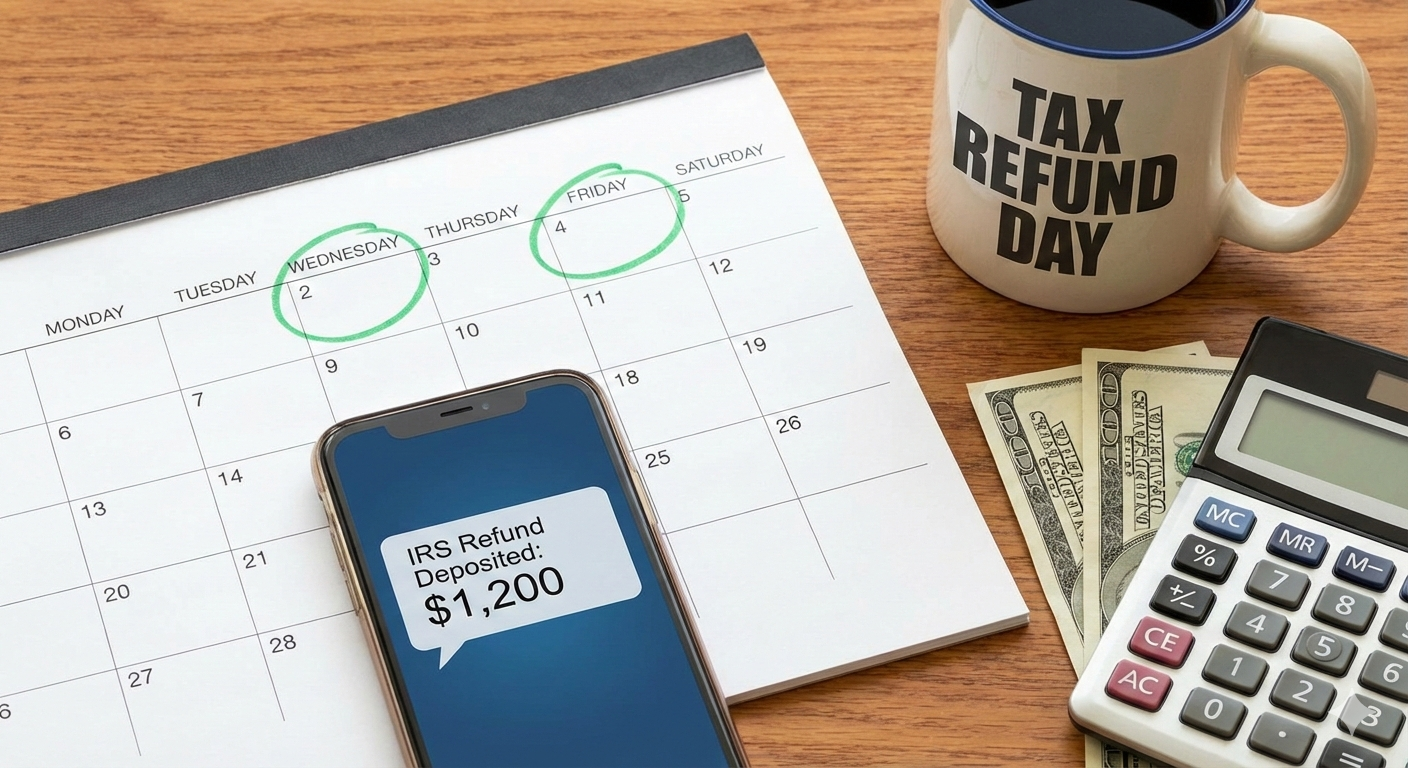
Tax season brings one burning question to millions of Americans: when will my refund actually hit my bank account? More specifically, many taxpayers wonder what day of the week does IRS deposit refunds. Understanding the IRS refund deposit schedule can help you plan your finances better and know exactly when to expect that much-anticipated money.
The 2026 tax filing season began on January 26, 2026, and with it comes updated information about refund timing, processing schedules, and deposit patterns. Whether you're waiting anxiously for your refund or planning ahead for next year, this comprehensive guide will answer all your questions about IRS refund deposit timing.
The IRS issues refunds only on business days, which means Monday through Friday, excluding federal holidays. While the IRS doesn't designate specific days of the week for all refund deposits, there is a pattern to how they process and release payments.
Tax refunds are processed by the IRS two times per week—one batch for direct deposits and another for paper checks. However, the actual day your refund appears in your account depends on several factors, including your bank's processing schedule and when the IRS approved your return.
Most taxpayers who file electronically and choose direct deposit receive their refunds within 21 days of the IRS accepting their return. The funds typically appear in bank accounts between Monday and Friday, with many banks posting deposits overnight or in the early morning hours.
The journey of your tax refund from filing to your bank account involves several stages, each with its own timing considerations.
When you file your tax return electronically, the IRS first validates basic information like your Social Security number, dependent information, and mathematical accuracy. This initial acceptance typically happens within 24 to 48 hours of e-filing. Paper returns take significantly longer—often four weeks or more—just to be entered into the IRS system.
Once accepted, your return enters the processing queue. During this stage, the IRS verifies income reported on W-2s and 1099s, checks for errors or inconsistencies, and calculates your actual refund amount. This is where the 21-day timeline begins.
For straightforward returns with no issues, this processing happens relatively quickly. However, certain factors can extend processing time, including claiming specific tax credits, having multiple income sources, or if your return gets flagged for additional review.
After processing, the IRS approves your refund amount and schedules it for payment. This is when you'll see a status update in the "Where's My Refund" tool showing that your refund has been approved and providing an estimated deposit date.
The IRS releases refund payments in batches. Once released, direct deposits typically take one to five business days to appear in your bank account, depending on your financial institution's processing speed.
While the IRS processes refunds throughout the week, most taxpayers notice a pattern in when refunds actually appear in their accounts.
Most banks receive IRS refund deposits overnight, generally posting them between 12 AM and 6 AM local time. However, the specific day this occurs varies based on when your return was processed and approved.
The IRS doesn't release all refunds on a single day. Instead, they process approved refunds continuously throughout each business week. This means your refund could be sent any day from Monday through Friday, depending on where you fall in the processing queue.
Many taxpayers report receiving their refunds mid-week, particularly on Wednesdays and Thursdays, but this isn't a hard rule. Your specific deposit day depends on your individual circumstances and processing timeline.
If you're tracking your refund status, Wednesday holds special significance. The IRS only updates refund status information once per week on Wednesdays. This means checking the "Where's My Refund" tool multiple times daily won't provide new information—you'll only see updates after the Wednesday refresh.
This weekly update schedule explains why some taxpayers see their refund status change from "being processed" to "refund approved" on Wednesday mornings, with the actual deposit appearing in their accounts within the next few business days.
Even after the IRS sends your refund, your bank's internal processing schedule affects when you can access the money. Some banks may post deposits on Saturdays if funds are received late on a Friday, while others hold deposits until the next business day.
Major national banks often process incoming deposits faster than smaller regional institutions. Some online banks and fintech companies even advertise early access to direct deposits, potentially giving you your refund a day or two before the official deposit date.
For the current tax season, understanding specific timing helps set realistic expectations.
The IRS started accepting returns as early as January 26, 2026. Taxpayers who filed on or shortly after this date and had straightforward returns could see refunds as early as mid-February.
Direct deposit typically arrives within 3 weeks (21 days) from the day your return is accepted. This 21-day timeframe represents the average, not a guarantee. Simple returns often process faster, while complex returns or those flagged for review may take longer.
Tax season sees distinct busy periods that can affect processing speed. The initial rush when filing opens in late January, and another surge right before the April 15 deadline, can slow overall processing times. Filing during off-peak periods—like early February or mid-March—may result in slightly faster processing.
Not all tax refunds follow the standard 21-day timeline. Several circumstances can accelerate or delay when you receive your money.
Federal law requires special handling for returns claiming these credits. If you claimed the Earned Income Tax Credit (EITC) or the Additional Child Tax Credit (ACTC), federal law requires the IRS to hold your entire refund until at least mid-February.
For 2026, the IRS is expected to release the first wave of EITC/ACTC refunds by February 27 through March 6, provided there are no issues with your return and you used direct deposit. This delay applies to your entire refund, not just the portion related to these credits.
The delay exists to give the IRS additional time to verify eligibility and prevent fraudulent claims, which have historically been problematic with these credits.
If you need to amend your tax return after filing, expect significantly longer processing times. Amended returns are processed manually and can take eight to twelve weeks or even longer during peak times. There's no specific schedule for when amended return refunds are deposited—they arrive whenever processing completes.
Sometimes the IRS flags returns for additional scrutiny. This might happen due to identity theft concerns, income verification issues, or unusual deductions. If your return requires manual review, processing can extend well beyond the standard 21-day window.
The IRS will typically send a letter if they need additional information or documentation. Responding promptly to these requests helps minimize delays.
If you mail a paper return, expect much longer processing times. Mailed returns take 4-8 weeks to process a refund, and this timeline has been extended in recent years due to IRS staffing challenges and the sheer volume of paper to process.
Paper returns must be manually entered into IRS systems by employees, creating a significant bottleneck. If you're eligible to file electronically, it's always the faster option.
Wondering where your refund is in the process? The IRS provides tools to check your status.
The official IRS "Where's My Refund" tool is your best resource for tracking refund progress. Available on IRS.gov or through the IRS2Go mobile app, this tool provides three stages of information:
You can check your status 24 hours after e-filing or four weeks after mailing a paper return. Remember, the tool only updates once weekly on Wednesdays, so frequent checking won't provide new information.
To use the tracking tool, you'll need:
This information ensures only you can access your refund details.
The IRS mobile app offers the same tracking functionality as the website but with easier access on your smartphone. You can enable notifications to alert you when your refund status changes, eliminating the need to check manually.
If you prefer speaking with someone or can't access online tools, call the automated IRS refund hotline at 800-829-1954. The automated system provides the same information as the online tools without needing to speak with an agent.
While you can't control IRS processing speeds entirely, several strategies help ensure the fastest possible refund.
E-filing is consistently the fastest way to get your return into the IRS system. Electronic returns are processed immediately upon acceptance, while paper returns sit in mailrooms before being manually entered into computers.
Tax preparation software validates your return before submission, catching errors that might delay processing. Most software also confirms when the IRS accepts your return, giving you a clear starting point for the 21-day timeline.
Direct deposit is significantly faster than waiting for a paper check. The IRS makes it clear that choosing direct deposit when e-filing is the fastest way to receive your tax refund.
Paper checks must be printed, mailed through the postal system, and then cleared by your bank—adding at least a week and often longer to the overall timeline. With direct deposit, funds transfer electronically within days of approval.
One of the most common refund delays comes from incorrect bank account information. Double-check your routing number and account number before submitting your return. A single wrong digit can send your refund to the wrong account or cause it to bounce back to the IRS.
If you're unsure about your account details, check a personal check or log into your online banking to verify the numbers.
While filing early doesn't necessarily speed up processing, it does put you ahead of the rush. The IRS processes returns in the order received (with some priority given to simpler returns). Filing in late January or early February means fewer returns ahead of yours in the queue.
Early filing also helps you avoid identity theft. Tax fraud often involves criminals filing fake returns using stolen Social Security numbers to claim refunds. If you file first, their fraudulent return will be rejected.
Mistakes slow everything down. Mathematical errors, incorrect Social Security numbers, misspelled names, or mismatched income information all trigger additional review. Take time to ensure every field is correct before submitting.
Tax software helps by automatically calculating figures and flagging potential errors, but you should still review everything carefully.
Some tax preparers and services offer "refund anticipation loans" or "instant refunds" that provide your money immediately for a fee. These are expensive loans—essentially you're borrowing against your own refund at high interest rates.
With e-filing and direct deposit, most taxpayers receive refunds within three weeks anyway. The fees charged for immediate access often aren't worth the short wait time saved.
Even with perfect timing and accuracy, sometimes refunds take longer than expected.
Before worrying, ensure the full 21-day processing window has passed since the IRS accepted your return. This is an average timeline, and some returns naturally take longer based on complexity.
If processing extends beyond 21 days, watch your mail for correspondence from the IRS. They'll send letters if they need additional information, found an error, or are reviewing your return for other reasons.
Respond promptly to any IRS requests. Delays in providing requested documentation extend the overall timeline.
If more than 21 days have passed since acceptance (or six weeks for paper returns) and the "Where's My Refund" tool shows no progress, you can contact the IRS directly.
Be prepared for long wait times if you call. The IRS experiences high call volumes during tax season. Having your tax return and all relevant documentation ready helps the conversation go smoothly.
Sometimes the issue isn't with the IRS but with your bank. If "Where's My Refund" shows your refund was sent, but you haven't received it, contact your financial institution. They can verify whether the deposit was received and if any holds or issues exist.
Banks occasionally place holds on large deposits for fraud prevention or account verification purposes. This is more common with deposits over several thousand dollars.
The 2026 filing season comes with unique considerations that may affect refund timing.
Recent government workforce reductions have impacted IRS staffing levels. Fewer employees means potentially longer processing times, especially for returns requiring manual review or paper filing processing.
The One Big Beautiful Bill Act passed in 2025 introduced various tax changes that required updates to IRS forms and processing systems. New deductions, credits, and rules can create processing complications as the IRS implements and verifies these changes.
Starting in 2026, the IRS is phasing out paper refund checks as part of an executive order modernizing government payments. Most taxpayers must receive refunds via direct deposit. Exceptions exist for those without bank access or certain disabilities, but the vast majority of refunds will now be electronic.
This change actually benefits most taxpayers by speeding up delivery, but it requires ensuring you have accurate banking information on file.
While this article focuses on federal refunds, many taxpayers also file state returns. State refund timing varies significantly by location.
Each state operates its own Department of Revenue with different processing capabilities and schedules. Some states process refunds very quickly—within two weeks—while others may take six weeks or longer.
States also have different peak filing periods and processing challenges. Generally, e-filing and direct deposit offer the same advantages at the state level as they do federally.
Check your state's Department of Revenue website for specific information about state refund timing and tracking tools. Many states offer "Where's My State Refund" tools similar to the federal version.
Many Americans rely on their tax refund as a financial windfall, using it for major purchases, debt payoff, or savings. Understanding the timing helps you plan appropriately.
While the IRS aims for 21-day processing, always budget for the possibility of delays. Don't make financial commitments—like large purchases or bill payments—based on an assumed refund date. Give yourself a cushion of at least a week or two beyond the expected deposit date.
If you receive a large refund each year, you're essentially giving the government an interest-free loan. Consider adjusting your W-4 withholding to have more money in each paycheck throughout the year rather than waiting for a lump sum at tax time.
The IRS provides a withholding calculator to help determine the right withholding level for your situation. Having appropriate withholding means smaller refunds but more cash flow during the year.
Use your bank's mobile app to set up deposit alerts. This way, you'll know immediately when your refund hits your account without needing to check constantly.
Several misconceptions circulate about tax refund timing. Let's clear up the most common ones.
Reality: While some taxpayers notice patterns, the IRS doesn't designate specific days for all refunds. Your deposit day depends on your individual processing timeline.
Reality: Calling the IRS won't make your return process faster. Unless there's an actual problem requiring resolution, your return progresses through the normal queue.
Reality: The size of your refund doesn't determine processing speed. A $500 refund processes at the same rate as a $5,000 refund, assuming similar complexity and no issues.
Reality: Even early filers may wait until March if they claim certain credits or if their returns require additional review.
So what day of the week does IRS deposit refunds? The answer is: any business day, Monday through Friday, depending on when your return completes processing. While the IRS doesn't release all refunds on a single designated day, understanding the processing timeline and factors that affect it helps you estimate when your refund will arrive.
For most taxpayers in 2026 who e-file and choose direct deposit, expect your refund within three weeks of the IRS accepting your return. Those claiming EITC or ACTC should plan for late February or early March deposits. Paper filers need to budget for six to eight weeks or longer.
The keys to getting your refund as quickly as possible remain consistent: file electronically, choose direct deposit, ensure accuracy, and verify your bank information. Track your status using the IRS tools, but remember they only update weekly on Wednesdays.
Tax refunds represent significant money for most Americans, and knowing when to expect yours helps with financial planning. While you can't control IRS processing speeds, understanding the system lets you set realistic expectations and maximize your chances of the quickest possible refund.
Whether your deposit arrives on a Monday, Wednesday, or Friday, the important thing is filing correctly and choosing the fastest delivery method. Then it's simply a matter of waiting for that welcome notification that your refund has hit your account.